Why curcumin is one of the most studied natural neuroprotective compounds.
Last Updated: March 21, 2026 · Medically Reviewed Content
Curcumin is the primary bioactive compound in turmeric (Curcuma longa), responsible for turmeric’s characteristic golden color and the vast majority of its therapeutic properties. While turmeric has been used in Ayurvedic and traditional Chinese medicine for thousands of years, modern neuroscience has identified curcumin as one of the most promising natural neuroprotective agents studied to date. Research published in Annals of Indian Academy of Neurology (PMID: 29766485) documented curcumin’s ability to cross the Blood-Brain Barrier, reduce neuroinflammation, neutralize free radicals in brain tissue, and support healthy brain aging.
What makes curcumin particularly valuable for brain health is its multi-mechanism action. Unlike many compounds that target a single pathway, curcumin simultaneously acts as an antioxidant (neutralizing reactive oxygen species), an anti-inflammatory (inhibiting NF-κB and COX-2 inflammatory pathways), a neuroprotectant (supporting BDNF production and neuroplasticity), and a potential amyloid-clearing agent (promoting the clearance of beta-amyloid plaques associated with Alzheimer’s disease). This multi-target activity is why curcumin has generated more than 15,000 peer-reviewed publications indexed in PubMed.
One of the most significant challenges in brain health supplementation is getting active compounds past the Blood-Brain Barrier (BBB). Many antioxidants and anti-inflammatory compounds that work well in the body cannot reach the brain because the BBB selectively blocks their passage. Curcumin’s lipophilic (fat-soluble) molecular structure allows it to cross the BBB and reach brain tissue directly — a critical property that distinguishes it from many other natural anti-inflammatory compounds.
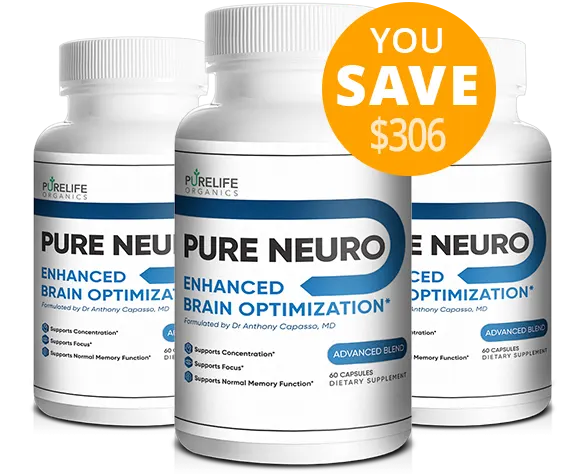
Once across the BBB, curcumin accumulates in brain regions involved in memory and cognition, including the hippocampus and prefrontal cortex. This targeted accumulation means curcumin delivers its antioxidant and anti-inflammatory effects precisely where they’re needed most for cognitive function. In Pure Neuro’s formula, curcumin works alongside S-Acetyl Glutathione and melatonin — two other BBB-crossing compounds — to provide layered antioxidant protection within the brain.
Chronic low-grade neuroinflammation is increasingly recognized as a major driver of cognitive decline and neurodegenerative disease. Unlike acute inflammation (which is a healthy immune response), chronic neuroinflammation persists for months or years, gradually damaging neurons and their support cells. This persistent inflammation is driven by activated microglia — the brain’s immune cells — that release pro-inflammatory cytokines (TNF-α, IL-1β, IL-6) and reactive oxygen species that damage surrounding brain tissue.
Curcumin modulates neuroinflammation through multiple mechanisms. It inhibits the NF-κB signaling pathway — the master regulator of inflammatory gene expression — reducing the production of pro-inflammatory cytokines. It suppresses COX-2 enzyme activity, which reduces inflammatory prostaglandin production. It also inhibits the activation of microglia, preventing the sustained inflammatory response that drives neuronal damage. These combined anti-inflammatory effects help create a brain environment that favors neuronal health, synaptic function, and cognitive performance.
Brain-Derived Neurotrophic Factor (BDNF) is a protein critical for learning, memory formation, and neuroplasticity — the brain’s ability to form new neural connections and adapt to new information. BDNF levels naturally decline with age, and low BDNF is associated with depression, cognitive decline, and neurodegenerative disease. Research has shown that curcumin can increase BDNF expression in the brain, supporting the growth, maintenance, and survival of neurons.
This BDNF-promoting effect is particularly important for older adults and anyone experiencing age-related cognitive changes. Higher BDNF levels support the formation of new synaptic connections (essential for learning and memory), enhance long-term potentiation (the biological basis of memory storage), and promote neuronal survival under stress. By supporting BDNF production, curcumin in Pure Neuro helps maintain the brain’s capacity for adaptation and learning throughout life.
Clinical trials have begun to validate curcumin’s cognitive benefits in human populations. A randomized, double-blind, placebo-controlled trial published in the American Journal of Geriatric Psychiatry found that participants taking curcumin for 18 months showed significant improvements in memory and attention compared to placebo, along with reduced amyloid and tau protein accumulation in brain regions involved in mood and memory. These findings suggest that curcumin not only improves current cognitive function but may also slow the biological processes that lead to long-term cognitive decline.
Additional clinical research has shown improvements in working memory, sustained attention, and overall cognitive processing in healthy older adults taking curcumin supplements. While larger, longer-term studies are still needed to establish definitive clinical guidelines, the existing evidence strongly supports curcumin’s role as a safe, natural neuroprotective agent with meaningful cognitive benefits — which is why Dr. Capasso included it as a core ingredient in the Pure Neuro formula.
One of the most significant challenges with curcumin supplementation is bioavailability. Raw curcumin from turmeric is poorly absorbed in the gastrointestinal tract, rapidly metabolized, and quickly eliminated from the body. Studies estimate that less than 1% of ingested curcumin reaches the bloodstream in its active form. This is why simply eating turmeric in food, while beneficial, does not deliver therapeutic levels of curcumin to the brain.
Various strategies have been developed to enhance curcumin bioavailability, including pairing with piperine (black pepper extract, which can increase absorption by up to 2,000%), using lipid-based delivery systems, nanoparticle formulations, and phytosome technology. The curcumin in Pure Neuro is formulated for enhanced bioavailability to ensure that a meaningful amount reaches the brain where it can exert its neuroprotective effects. Combined with other BBB-crossing compounds in the formula (melatonin and S-Acetyl Glutathione), the curcumin in Pure Neuro has the best opportunity to reach brain tissue and deliver its documented benefits.
Non-steroidal anti-inflammatory drugs (NSAIDs) like ibuprofen have shown some neuroprotective effects in epidemiological studies, with long-term NSAID users showing reduced risk of Alzheimer’s disease. However, chronic NSAID use carries significant risks including gastrointestinal bleeding, kidney damage, cardiovascular complications, and liver toxicity. These side effects make long-term NSAID use impractical for brain health prevention.
Curcumin provides comparable anti-inflammatory mechanisms (NF-κB inhibition, COX-2 suppression) without the adverse effects associated with pharmaceutical anti-inflammatories. Its safety profile for long-term daily use is well-established, with no significant side effects reported in clinical trials at standard supplemental doses. This makes curcumin — and by extension, natural neuroprotective supplements like Pure Neuro — a more sustainable approach to long-term brain health protection than pharmaceutical alternatives.
In Pure Neuro’s 9-ingredient formula, curcumin serves as the primary anti-inflammatory and antioxidant agent. It works synergistically with the other ingredients: Reishi Mushroom provides additional neuroprotection and NGF support, S-Acetyl Glutathione reinforces antioxidant defense within the brain, Panax Ginseng enhances cerebral blood flow and stress resilience, and the mineral cofactors (selenium, zinc, vitamin C) ensure that the brain’s endogenous antioxidant systems function at full capacity. Together, these ingredients address mitochondrial health, BBB integrity, neuroinflammation, and neuroplasticity — providing comprehensive cognitive support that no single ingredient could deliver alone.
While no supplement can prevent or treat Alzheimer’s disease, curcumin research has generated intriguing findings relevant to Alzheimer’s pathology. Studies have shown that curcumin can bind to amyloid-beta peptides and inhibit their aggregation into the toxic plaques that are a hallmark of Alzheimer’s disease. Curcumin has also demonstrated the ability to promote the clearance of existing amyloid deposits in animal models. Additionally, curcumin’s anti-inflammatory effects may help reduce the neuroinflammation that accelerates Alzheimer’s progression.
Epidemiological data from India — where turmeric is consumed daily in significant quantities — shows notably lower rates of Alzheimer’s disease compared to Western populations. While this correlation alone doesn’t prove causation (many lifestyle and genetic factors differ between populations), it is consistent with curcumin’s documented neuroprotective mechanisms. The National Institute on Aging has funded research into curcumin’s potential role in Alzheimer’s prevention, reflecting the scientific community’s interest in this compound.
Among natural anti-inflammatory compounds studied for brain health, curcumin stands out for several reasons. Unlike omega-3 fatty acids (which primarily modulate inflammatory resolution), curcumin directly inhibits the NF-κB inflammatory signaling pathway — the same target as many pharmaceutical anti-inflammatories. Unlike resveratrol (which has extremely poor oral bioavailability), curcumin’s bioavailability can be significantly enhanced through established formulation techniques. And unlike CBD (which acts primarily on endocannabinoid receptors), curcumin’s multi-target mechanism addresses inflammation, oxidation, neuroplasticity, and amyloid clearance simultaneously.
This multi-target activity is curcumin’s greatest advantage for long-term brain health. Rather than modulating a single pathway, curcumin simultaneously reduces inflammation (NF-κB, COX-2), neutralizes free radicals (direct antioxidant scavenging), supports neuroplasticity (BDNF upregulation), and may inhibit amyloid pathology. In Pure Neuro’s formula, curcumin’s multi-target effects are amplified by complementary ingredients that address additional brain health pathways: reishi mushroom for NGF support, glutathione for BBB protection, and mineral cofactors for endogenous antioxidant enzyme systems.
Curcumin has an excellent safety profile established through extensive clinical research. The Joint FAO/WHO Expert Committee on Food Additives (JECFA) has set an acceptable daily intake of 0–3 mg/kg body weight for curcumin. Clinical trials using doses up to 8,000 mg/day for short periods and 500–2,000 mg/day for extended periods have reported no serious adverse effects. Common mild side effects at very high doses include gastrointestinal discomfort, which is rare at standard supplemental doses. Curcumin does not interact significantly with most common medications, though individuals on blood-thinning medications should consult their physician, as curcumin may have mild antiplatelet effects.
The volume of curcumin brain health research continues to grow rapidly. Over 400 new curcumin-related studies are published annually in peer-reviewed journals indexed by PubMed, with an increasing proportion focusing specifically on neurological applications. Research funded by the National Institute on Aging and the National Institute of Neurological Disorders and Stroke continues to explore curcumin’s potential for preventing and slowing neurodegenerative processes. The scientific consensus is that curcumin represents one of the most promising natural neuroprotective compounds identified to date, with mechanisms of action that are well-understood, multi-targeted, and relevant to the key pathological processes driving age-related cognitive decline.
For consumers, the practical takeaway is clear: curcumin is not a trendy superfood or an unproven alternative remedy — it is one of the most extensively studied natural compounds in modern pharmacology, with over 15,000 published research papers supporting its biological activity. In the context of Pure Neuro’s 9-ingredient formula, curcumin serves as the primary anti-inflammatory and antioxidant agent, working in concert with complementary ingredients that address mitochondrial health, BBB integrity, nerve growth factor support, and essential mineral cofactors for a complete brain health solution.
Curcumin represents a rare convergence of traditional wisdom and modern science. Used for millennia in Ayurvedic medicine and now supported by over 15,000 peer-reviewed publications, it offers multi-mechanism neuroprotection through anti-inflammatory, antioxidant, BDNF-promoting, and potentially amyloid-clearing pathways. Its ability to cross the Blood-Brain Barrier — a property that many otherwise beneficial compounds lack — ensures that it delivers these effects directly to the brain tissue where they are needed most. For anyone seeking evidence-based natural brain health support, curcumin is among the most thoroughly validated ingredients available.
With a 60-day money-back guarantee and a formula backed by thousands of published studies on its individual ingredients, Pure Neuro provides a risk-free opportunity to experience curcumin’s documented neuroprotective benefits alongside 8 complementary brain-supporting compounds. Dr. Capasso’s multi-pathway formula ensures that curcumin works not in isolation but as part of an integrated system designed for comprehensive cognitive support at any age.